
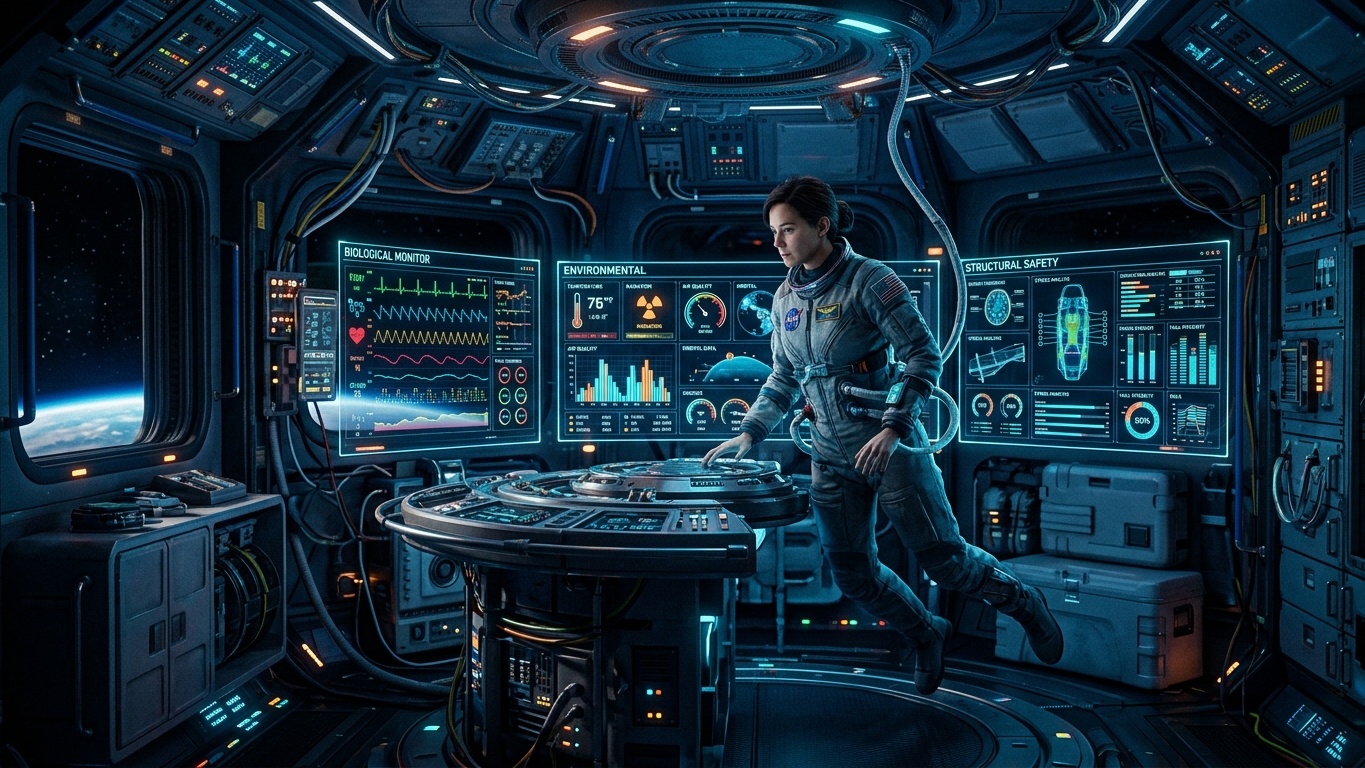

The vacuum of space is a canvas of absolute zero and intense radiation, an environment fundamentally hostile to terrestrial life. To survive within this abyss, humanity must construct an artificial biosphere—a complex engineering marvel known as a spacecraft. Inside this metallic shell, the laws of physics are manipulated to sustain human metabolism. However, the removal of gravity, the ultimate structural constant of Earth, introduces a cascade of physical and physiological anomalies. Spaceflight is not merely a voyage; it is a continuous negotiation with physical limits. To maintain the delicate boundary between life and the void, spacecraft operations rely on rigorous safety protocols and environmental controls. Understanding these precautions requires an examination of the fluid dynamics, cellular biology, and emergency engineering that allow humans to live among the stars.
1. The Fluid Dynamics of Danger: Airflow and Invisible Hazards
On Earth, we take natural convection for granted. When a warm fluid or gas expands, it becomes less dense and rises, while cooler, denser fluid sinks. This gravitational buoyancy drives the circulation of air, dispersing gases and preventing stagnation. In the microgravity environment of a spacecraft, however, buoyancy is virtually non-existent. Without gravity to drive density differentials, natural convection ceases. This simple physical change creates a silent, invisible threat to the crew: the formation of localized gas pockets.
When an astronaut breathes out, they expel carbon dioxide (). On Earth, this warm gas rises and mixes with the surrounding air. In space, the exhaled lingers around the astronaut’s head, forming a stagnant bubble of warm, carbon dioxide-rich air. Without intervention, the astronaut would quickly reinhale their own metabolic waste, leading to hypercapnia—characterized by headaches, cognitive decline, visual disturbances, and eventually carbon dioxide narcosis.
To prevent this, spacecraft must rely entirely on forced convection. A network of high-efficiency cabin fans and air ducts runs continuously, maintaining a constant airflow throughout the habitable modules. The velocity of this airflow is carefully calibrated: too slow, and stagnant pockets will form; too fast, and the constant noise and drafts will cause dry eyes and discomfort for the crew.
Furthermore, this forced air must be continuously scrubbed. The Carbon Dioxide Removal Assembly (CDRA) on the International Space Station (ISS) utilizes regenerable zeolite desiccant beds to adsorb from the air, venting it spaceward or redirecting it to the Sabatier reactor, which combines carbon dioxide and hydrogen to produce water and methane. Safety protocols dictate that levels must be monitored continuously using infrared gas analyzers. Should a local fan fail, the immediate protocol requires the crew to evacuate the area or deploy portable fans to prevent carbon dioxide buildup, illustrating how a fundamental thermodynamic difference in space necessitates a complex mechanical solution.
2. Physical Toll of Weightlessness: Bone Decalcification and Cardiovascular Shift
The human body is an adaptive machine, tuned to the constant acceleration of Earth’s gravity (). When this load is removed, the physiological systems begin to optimize for a zero-load environment—an optimization that is highly detrimental to long-term health and survival.
The most immediate effect of microgravity is the cephalad fluid shift. On Earth, gravity pulls bodily fluids downward, and the vascular system maintains a pressure gradient to pump blood back up to the brain. In space, fluids redistribute evenly, causing about two liters of fluid to shift from the lower limbs toward the torso and head. This phenomenon, colloquially called “puffy face-chicken legs syndrome,” increases intracranial pressure. Modern research links this persistent pressure to Spaceflight-Associated Neuro-ocular Syndrome (SANS), characterized by optic nerve sheath swelling, choroidal folds, and progressive hyperopic shifts (farsightedness). To mitigate SANS and cardiovascular deconditioning, astronauts must adhere to strict hydration protocols, and scientists are testing Lower Body Negative Pressure (LBNP) devices to pull fluids back to the legs mechanically.
Simultaneously, the musculoskeletal system undergoes rapid degradation. Without the mechanical stress of walking and fighting gravity, the body determines that maintaining dense bone structures and large skeletal muscles is energetically wasteful. Osteoblasts (bone-building cells) slow down, while osteoclasts (bone-resorbing cells) continue to break down bone tissue, releasing calcium into the bloodstream. Astronauts lose approximately 1% to 1.5% of their bone mineral density in weight-bearing areas (like the pelvis and femur) for every month spent in space. This rapid decalcification leads to osteopenia and raises the risk of osteoporosis-like fractures upon return to Earth, as well as the immediate danger of kidney stones due to high calcium concentrations in the urine.
To combat this decay, safety protocols mandate two hours of intense daily exercise. The Advanced Resistive Exercise Device (ARED) uses vacuum cylinders to simulate free-weight exercises, delivering up to 260 pounds of force to the user’s musculoskeletal system. This is supplemented by the T2 Treadmill, where astronauts are strapped down with bungee cords to run under simulated gravity, and the CEVIS cycle ergometer. These exercise regimens are not optional fitness routines; they are critical medical countermeasures required to preserve structural integrity, ensuring that the human machine remains functional for both spacecraft operations and gravity-well reentry.
3. Emergency Architecture: The Fire, Depressurization, and Toxic Leak Triad
Safety in space is predicated on the assumption that containment is absolute. When containment fails, the spacecraft becomes a trap. Emergency protocols are structured around three critical hazards: fire, depressurization, and toxic contamination.
Fire behaves differently in microgravity. Without natural convection, a flame cannot draw in fresh oxygen or discard combustion products by rising. Instead, it forms a slow-burning, spherical flame that depends entirely on molecular diffusion to survive. However, inside a spacecraft, the forced ventilation system acts as a wind tunnel, providing a continuous supply of oxygen to the flame. This means a fire in space can grow rapidly, feeding on the artificial breeze. Furthermore, detecting fire is challenging because smoke does not rise to a ceiling; it follows the ventilation currents. Spacecraft are equipped with photo-electric smoke detectors placed within air ducts, and extinguishing protocols are highly specialized. Water cannot be sprayed freely, as floating droplets could short-circuit electronics. Instead, carbon dioxide or fine-water-mist extinguishers are used, and the first step in any fire protocol is to cut off electrical power to the affected module and shut down the ventilation system to suffocate the flame.
Depressurization is the most immediate threat to life. It can be caused by structural fatigue, seal degradation, or micrometeoroid and orbital debris (MMOD) impacts. Spacecraft hulls are shielded with Whipple shields—multi-layered barriers of aluminum, Kevlar, and Nextel ceramic fabric that break up and scatter incoming projectiles. If a leak occurs, pressure sensors trigger automated alarms. The crew does not immediately search for the leak; instead, they retreat to a “Safe Haven”—typically their return spacecraft, such as the SpaceX Crew Dragon or Soyuz—which can be sealed off and serves as a lifeboat. From there, they systematically close the hatches between modules, monitoring pressure decay in each section to isolate the leaking compartment. Once isolated, the compromised module can be sealed permanently or repaired using specialized patching kits.
The third pillar of emergency architecture is the toxic leak. Spacecraft thermal control systems use hazardous fluids like anhydrous ammonia to transfer heat from internal electronics to external radiators. If ammonia leaks into the cabin, it can cause severe respiratory damage and blindness. The protocol for a toxic leak requires the crew to immediately don oxygen masks, isolate the affected module, and use the Environmental Control and Life Support System (ECLSS) to scrub the atmosphere, utilizing specialized charcoal filters and catalytic oxidizers. The mitigation of these three hazards requires an integrated system where software, structural engineering, and human training converge to prevent a single failure from cascading into a catastrophic loss of crew.
4. Human Factors and Psychosocial Systems: The Silent Shield of Long-Duration Flight
While physical and chemical systems protect the body, human factors and psychosocial protocols protect the mind. A spacecraft is an environment of profound isolation, confinement, and artificial schedules. The lack of a natural day-night cycle, the constant background hum of life support systems, and the high-stress nature of space operations can degrade cognitive function and team dynamics.
To prevent cognitive decline, spacecraft operations employ strict schedule management. The day is divided using Coordinated Universal Time (UTC), imposing an artificial 24-hour cycle. Sleep stations are carefully engineered: they are private, sound-dampened cabins that shield astronauts from the ambient noise of the station. Inside these cabins, lighting systems utilize dynamic solid-state LED arrays. These lights shift from blue-enriched spectra in the morning (to suppress melatonin and promote alertness) to red-shifted spectra in the evening (to facilitate natural sleep cycles).
Human-system integration is codified in standards like NASA-STD-3001, which governs everything from the reachability of control panels in a spacesuit to the physical volume required per crew member to prevent psychological crowding. Furthermore, behavioral health support is a structured component of long-duration missions. Weekly video calls with family, regular consultations with flight psychologists, and carefully curated menus containing comfort foods are not luxury accommodations; they are operational requirements. The psychological resilience of the crew is the final line of defense; if the human operators fail due to fatigue, stress, or conflict, the most advanced engineering systems in the world cannot save the spacecraft.
Conclusion: Engineering Resilience for the Next Frontier
The protocols and precautions governing life aboard a spacecraft represent a paradigm shift in how humanity interacts with technology. In space, safety is not an add-on feature; it is the core architecture. Every breath, step, and heartbeat is supported by an intricate network of sensors, pumps, filters, and biological countermeasures.
As we look toward the next frontier—establishing permanent bases on the Moon and launching crewed missions to Mars—these safety systems must transition from open-loop, earth-dependent configurations to fully closed-loop, autonomous ecosystems. The technologies developed to recycle water, scrub carbon dioxide, and monitor structural health in the depths of space will not only allow us to traverse the solar system but will also refine how we manage resources and environmental crises on Earth. The engineering of space survival is, ultimately, the blueprint for sustainable civilization.
우주라는 가혹한 공간은 절대 영도에 가까운 극저온과 강력한 우주 방사선이 지배하는, 지구상의 생명체에게 근본적으로 적대적인 영역입니다. 이 거대한 심연 속에서 인류가 생존하기 위해서는 스스로 완벽한 인공 생물권을 구축해야만 하며, 그 기술적 결정체가 바로 우주선(Spacecraft)입니다. 금속으로 둘러싸인 이 폐쇄된 인공 껍질 내부에서 인간은 물리 법칙을 교묘하게 제어하며 대사 활동을 유지합니다. 그러나 지구 생태계의 절대적인 물리적 상수인 중력()이 사라진 미소중력(Microgravity) 환경은 신체와 우주선 내부 구조 전반에 예측하기 힘든 물리적, 생리학적 이상 현상을 야기합니다. 우주 비행은 단순한 탐험이 아니라, 가혹한 물리적 한계와 매 순간 벌이는 정교한 협상 과정입니다. 따라서 우주선 내부의 모든 안전 수칙과 생명 유지 시스템은 철저한 과학적 사실과 공학적 원리에 기반하여 설계됩니다. 우주선 내부의 주의사항과 안전 프로토콜을 이해하기 위해서는 미소중력 상태에서의 유체역학, 세포 생물학, 그리고 극한 상황을 대비한 긴급 제어 공학을 다각도로 분석해야 합니다.
1. 보이지 않는 위협: 대류의 부재와 공기 흐름 제어
지구상에서 우리는 밀도 차이에 의한 자연 대류(Natural Convection)의 혜택을 당연하게 누리며 살아갑니다. 온도가 올라간 기체나 액체는 팽창하여 밀도가 낮아지므로 위로 떠오르고, 상대적으로 차갑고 밀도가 높은 유체는 아래로 가라앉습니다. 이러한 중력 기반의 부력(Buoyancy) 현상은 대기를 끊임없이 순환시켜 기체를 확산시키고 공기의 정체를 막아줍니다. 그러나 중력이 거의 존재하지 않는 우주선 내부에서는 밀도 차이에 의한 부력이 작용하지 않습니다. 즉, 자연 대류가 완전히 중단되는 물리적 변화가 발생합니다. 이 사소해 보이는 열역학적 변화는 우주비행사들에게 보이지 않는 치명적인 위협을 제공하는데, 바로 ‘이산화탄소 주머니(CO2 Pocket)’의 형성입니다.
우주비행사가 호흡할 때 배출하는 이산화탄소()는 지구에서라면 따뜻한 온도로 인해 즉시 위로 떠올라 주변 공기와 섞입니다. 반면 미소중력 환경에서는 호흡기관을 통해 방출된 이산화탄소가 비행사의 머리 주변에 그대로 정체되어 마치 보이지 않는 거대한 가스 방울처럼 비행사의 얼굴을 감싸게 됩니다. 만약 이 상태를 방치한다면 비행사는 자신이 방출한 배기가스를 다시 흡입하게 되며, 이는 혈중 이산화탄소 농도를 급격히 높여 고탄산혈증(Hypercapnia)을 유발합니다. 초기에는 가벼운 두통과 판단력 저하, 시야 흐림 등의 증상으로 시작하지만, 심해지면 혼수 상태에 빠지거나 질식사에 이를 수 있습니다.
이 문제를 해결하기 위해 우주선은 강제 대류(Forced Convection) 시스템에 100% 의존합니다. 우주선 내부에는 고성능 환기 팬(Cabin Fan)과 복잡한 공기 덕트 네트워크가 24시간 내내 작동하며 모든 모듈에 인위적인 공기 흐름을 만들어냅니다. 이때 공기 흐름의 속도는 고도의 물리적 계산을 통해 제어됩니다. 풍속이 너무 느리면 곳곳에 데드존(Dead Zone)이 발생하여 이산화탄소가 정체되고, 반대로 너무 빠르면 소음이 극대화될 뿐 아니라 지속적인 바람으로 인해 비행사들이 안구 건조증이나 호흡기 불편함을 겪게 됩니다.
동시에, 이렇게 순환되는 공기는 지속적으로 정화되어야 합니다. 국제우주정거장(ISS)의 이산화탄소 제거 장치(CDRA, Carbon Dioxide Removal Assembly)는 흡착제인 제올라이트(Zeolite) 베드를 사용하여 공기 중의 이산화탄소를 선택적으로 흡수하고, 이를 우주 공간으로 방출하거나 사바티에(Sabatier) 반응기로 보내 수소와 반응시켜 물과 메탄을 생성합니다. 우주선 안전 프로토콜에 따라 실내 농도는 적외선 가스 분석기를 통해 실시간으로 감시되며, 특정 구역의 환기 팬이 고장 날 경우 비행사들은 즉시 해당 구역을 대피하거나 휴대용 팬을 설치하여 인위적으로 가스를 분산시켜야 합니다. 지구의 물리 법칙이 작동하지 않는 공간에서 인간이 숨을 쉬기 위해 얼마나 정교한 기계적 보완 장치가 필요한지 잘 보여주는 사례입니다.
2. 무중력이 신체에 새기는 흔적: 골밀도 감소와 상반신 액체 이동
인간의 신체는 지구의 중력 가속도()에 최적화되도록 진화한 정교한 유기체적 기계입니다. 우주 공간에 진입하여 중력이라는 물리적 부하가 사라지면, 우리 몸은 즉시 부하가 없는 환경에 맞춰 스스로를 재조정하기 시작합니다. 이러한 신체적 최적화는 단기적으로는 효율적일지 몰라도, 장기적인 생존과 지구 귀환 관점에서는 매우 파괴적인 결과를 낳습니다.
미소중력 환경에 노출되었을 때 가장 먼저 나타나는 현상은 ‘체액의 상반신 쏠림(Cephalad Fluid Shift)’입니다. 지구에서는 중력이 체액을 아래로 끌어당기기 때문에 혈관 시스템은 피를 뇌로 밀어 올리기 위해 혈압을 조율합니다. 그러나 우주에서는 다리에 몰려 있던 약 2리터의 체액이 상반신과 머리 쪽으로 균등하게 이동합니다. 이로 인해 우주비행사들은 얼굴이 붓고 다리가 얇아지는 이른바 ‘부푼 얼굴과 가느다란 다리(Puffy Face-Chicken Legs)’ 현상을 겪게 됩니다. 머리 쪽으로 쏠린 액체는 뇌압과 안압을 높이며, 이는 안구 뒤쪽을 평평하게 만들고 시신경을 부어오르게 하는 ‘우주비행 관련 신경-안구 증후군(SANS, Spaceflight-Associated Neuro-ocular Syndrome)’을 유발합니다. 이는 영구적인 시력 저하로 이어질 수 있으므로, 비행사들은 체액 분배를 강제로 유도하기 위해 다리 부위에 음압을 가하는 하체음압장비(LBNP, Lower Body Negative Pressure)를 정기적으로 착용하여 머리에 집중된 압력을 분산시켜야 합니다.
더불어 골격계와 근육계의 퇴화 역시 심각한 수준으로 진행됩니다. 체중을 지탱하고 중력에 저항할 필요가 없어지면 우리 몸은 밀도 높은 뼈와 강한 근육를 유지하는 데 에너지를 쓰는 것이 비효율적이라고 판단합니다. 이에 따라 뼈를 생성하는 골모세포(Osteoblast)의 활동은 둔화되는 반면, 뼈를 파괴하고 흡수하는 파골세포(Osteoclast)의 작용은 그대로 유지되어 뼈 조직에서 칼슘이 급격히 빠져나가 혈액으로 배출됩니다. 우주비행사들은 우주에 머무는 동안 척추, 골반, 대퇴골 등 체중을 지탱하는 주요 부위에서 매달 약 1.0%에서 1.5%에 달하는 골밀도를 상실합니다. 이는 지구 귀환 시 심각한 골다공증성 골절을 유발할 뿐만 아니라, 소변으로 과도하게 배출된 칼슘이 결정을 이루어 요로결석(Kidney Stones)이라는 극심한 급성 통증을 유발할 수 있습니다.
이러한 근골격계 붕괴를 지연시키기 위해 우주선 안전 프로토콜은 하루 최소 2시간 이상의 의무적인 고강도 운동을 규정하고 있습니다. 국제우주정거장에 설치된 첨단 저항성 운동 장치(ARED, Advanced Resistive Exercise Device)는 무중력 상태에서도 진공 실린더를 이용해 최대 260파운드(약 118kg)의 하중을 뼈와 근육에 가할 수 있도록 설계되어 스쿼트나 데드리프트 같은 중량 운동을 가능하게 합니다. 여기에 번지코드로 몸을 묶고 달리는 T2 러닝머신과 CEVIS 자전거 정밀 부하 장치가 동원됩니다. 이러한 운동 프로토콜은 단순한 건강 관리가 아니라, 귀환 후 인간으로서의 형태와 기능을 유지하기 위한 필수적인 의료적 방어선입니다.
3. 우주선 비상 아키텍처: 화재, 감압, 독성 물질 누출의 3대 재난
우주선에서의 안전은 외부와의 완벽한 차단을 전제로 합니다. 만약 이 물리적 장벽이 무너지면 우주선은 지구상 그 어떤 곳보다 위험한 덫으로 돌변합니다. 우주선 비상 대응 아키텍처는 화재(Fire), 감압(Depressurization), 독성 물질 누출(Toxic Leak)이라는 3대 재난 시나리오를 중심으로 설계되어 있습니다.
첫째, 무중력 상태에서의 화재는 우리가 지상에서 보는 불꽃과 물리적으로 완전히 다르게 행동합니다. 대류가 없기 때문에 불꽃은 신선한 산소를 흡수하거나 연소 생성 가스를 위로 보낼 수 없습니다. 그 결과 화재 초기에는 아주 느리게 타오르는 둥근 구형의 불꽃(Spherical Flame)을 형성하며 확산이 둔화되는 것처럼 보입니다. 그러나 우주선 내부에서 강제로 가동 중인 환기 시스템은 불꽃에 산소를 계속해서 공급하는 윈드 터널(Wind Tunnel) 역할을 하게 되어, 화재가 순식간에 공기 흐름을 타고 우주선 전체로 번질 수 있습니다. 또한 연기가 위로 상승하지 않고 바람 방향에 따라 무작위로 흐르기 때문에 화재 지점을 눈으로 찾기 어렵습니다. 따라서 우주선 환기 덕트 내부에 배치된 광전식 연기 감지기가 화재를 포착하면, 제어 컴퓨터는 즉시 해당 모듈의 전원을 차단하고 환기 팬을 정지시켜 산소 공급을 중단해야 합니다. 소화 시에도 물을 뿌리면 미세한 물방울들이 사방으로 날아가 전자 장비의 쇼트를 유발하므로, 이산화탄소 소화기나 미세 물 분무 소화기를 사용해야 합니다.
둘째, 감압 사고는 우주비행사의 생명을 가장 빠르게 앗아갈 수 있는 재난입니다. 우주 쓰레기나 미소운석(MMOD)의 충돌, 혹은 밀봉 실의 노화로 인해 우주선 외벽에 균열이 생기면 내부 기압이 급격히 떨어집니다. 이를 방지하기 위해 우주선은 알루미늄, 케블라(Kevlar), 넥스텔(Nextel) 세라믹 직물 등으로 구성된 다층 휘플 실드(Whipple Shield)로 외벽을 감싸 날아오는 미세 물체를 파쇄하고 흡수합니다. 만약 미세 누출이 감지되어 압력 저하 알람이 울리면 비행사들은 즉시 누출 부위를 찾는 것이 아니라, 도킹되어 있는 우주선(소유즈나 크루 드래곤 등)인 ‘안전 피난처(Safe Haven)’로 대피하여 해치를 밀봉해야 합니다. 비상 탈출용 우주선 내부에서 안전을 확보한 후 비행사들은 각 모듈 사이의 해치를 하나씩 닫으며 기압 변화 추이를 분석함으로써 누출이 발생한 모듈을 역으로 추적해 고립시킵니다. 고립된 모듈은 진공 상태로 방치하거나 특수 패치 키트를 이용해 내부에서 수리 작업을 수행합니다.
셋째, 독성 물질 누출은 우주선의 복잡한 열 제어 시스템과 밀접한 연관이 있습니다. 우주선 내부 장비에서 발생하는 열은 무수 암모니아(Anhydrous Ammonia) 냉각 루프를 통해 외부 라디에이터로 전달됩니다. 만약 이 암모니아가 내부 공기 순환계로 흘러 들어온다면 비행사들은 심각한 호흡기 화상과 실명 위험에 노출됩니다. 독성 암모니아 누출 경보가 울리면 승무원들은 즉시 산소마스크를 착용하고 감염된 구역을 격리한 후, 생명유지장치(ECLSS)의 활성탄 필터와 촉매 산화 장치를 가동하여 대기 중의 화학 물질을 강제로 여과해야 합니다. 이 세 가지 재난 대응 시스템은 센서 기술, 구조 공학, 인간 행동 훈련이 유기적으로 결합하여 단일 장애가 참사로 이어지는 것을 막는 방어 기제입니다.
4. 인간 공학 및 지속 가능성: 폐쇄 환경에서의 심리적 안정망
하드웨어와 생화학적 필터가 인간의 육체를 보호한다면, 인간 공학(Human Factors)과 정신 사회적 안전 프로토콜은 비행사들의 정신적 붕괴를 막아줍니다. 우주선이라는 공간은 가혹한 고립성, 극단적인 밀폐성, 그리고 인위적으로 조율된 시간표가 지배하는 환경입니다. 지구의 자연스러운 낮과 밤의 주기가 존재하지 않고, 수많은 기계 장치가 내뿜는 데시벨 높은 백색 소음이 끊임없이 고막을 자극하며, 사소한 실수가 치명적인 사고로 이어질 수 있다는 정신적 압박은 인지 기능 저하와 승무원 간의 심각한 갈등을 초래할 수 있습니다.
이러한 인지 기능 저하와 심리적 불안을 통제하기 위해 우주정거장은 협정 세계시(UTC)를 기준으로 24시간 단위의 정교한 일정 관리를 실시합니다. 특히 비행사들의 수면 환경 설계는 안전의 핵심 요소입니다. 개인 수면실은 외부 소음과 빛을 철저히 차단하도록 방음 설계되어 있으며, 수면실 내부 조명 시스템은 동적 LED 어레이를 사용합니다. 이 인공 조명은 아침에는 멜라토닌 분비를 억제하여 각성을 돕는 청색광 영역의 스펙트럼을 방출하고, 저녁에는 숙면을 유도하는 적색 편향 스펙트럼으로 자동 전환되어 비행사들의 24시간 생체 리듬(Circadian Rhythm)을 동기화시킵니다.
인간과 시스템의 통합을 규정하는 나사의 우주 비행 인간-시스템 표준(NASA-STD-3001)은 우주복을 입었을 때 제어 콘솔의 도달 범위부터 좁은 공간에서 인간이 느끼는 심리적 과밀을 해소하기 위한 1인당 최소 물리적 체적까지 엄격하게 정의하고 있습니다. 또한 장기 체류 비행사들을 위한 심리적 지지 프로그램 역시 필수적으로 운영됩니다. 가족과의 정기적인 화상 통화, 비행 심리 전문가와의 1:1 상담, 그리고 우주식 중에서도 향수를 달랠 수 있는 기호 식품(Comfort Food)의 주기적 배송 등은 단순한 혜택이 아닌 비행사의 정신적 탄력성을 유지하기 위한 핵심 작전 사항입니다. 비행사들의 정신적 붕괴는 곧 인적 오류(Human Error)로 이어져 우주선 전체의 파멸을 부를 수 있기 때문입니다.
Conclusion: 다음 개척지를 향한 공학적 복원력의 설계
우주선 내부의 삶을 지배하는 수많은 안전 수칙과 정교한 기계 장치들은 인류가 기술과 맺는 관계의 근본적인 패러다임 전환을 보여줍니다. 우주라는 한계 상황에서 안전은 사후에 추가하는 옵션이 아니라, 우주선 설계의 뼈대를 이루는 핵심 아키텍처 그 자체입니다. 비행사가 들이쉬는 숨 한 모금, 딛는 걸음 한 번, 매 순간의 심장 박동은 수천 개의 센서, 펌프, 필터, 그리고 과학적 대응책이 촘촘히 엮어낸 인공 생태계 안에서만 비로소 보장될 수 있습니다.
앞으로 인류가 달에 영구 기지를 건설하고 화성으로 유인 탐사선을 보내는 심우주 개척 시대에 진입하게 되면, 이러한 안전 시스템은 지구의 보급에 의존하는 개방형 루프에서 완전히 자급자족할 수 있는 ‘폐쇄 루프(Closed-Loop)’ 자율 생태계로 진화해야 합니다. 머나먼 우주 공간에서 이산화탄소를 완벽히 재활용하고, 아주 작은 공기 누출도 스스로 탐지하여 복구하는 기술들은 단순히 태양계를 개척하는 수단에 머무는 것이 아닙니다. 이는 기후 변화와 자원 부족으로 위기를 겪고 있는 지구라는 거대한 우주선 안에서 인류가 한정된 자원을 보존하고 문명을 지속 가능하게 유지하기 위한 최고의 기술적 지침서가 될 것입니다. 우주 생존의 공학적 설계는 결국 인류가 미래에 생존하기 위한 지속 가능한 문명의 청사진입니다.

답글 남기기