
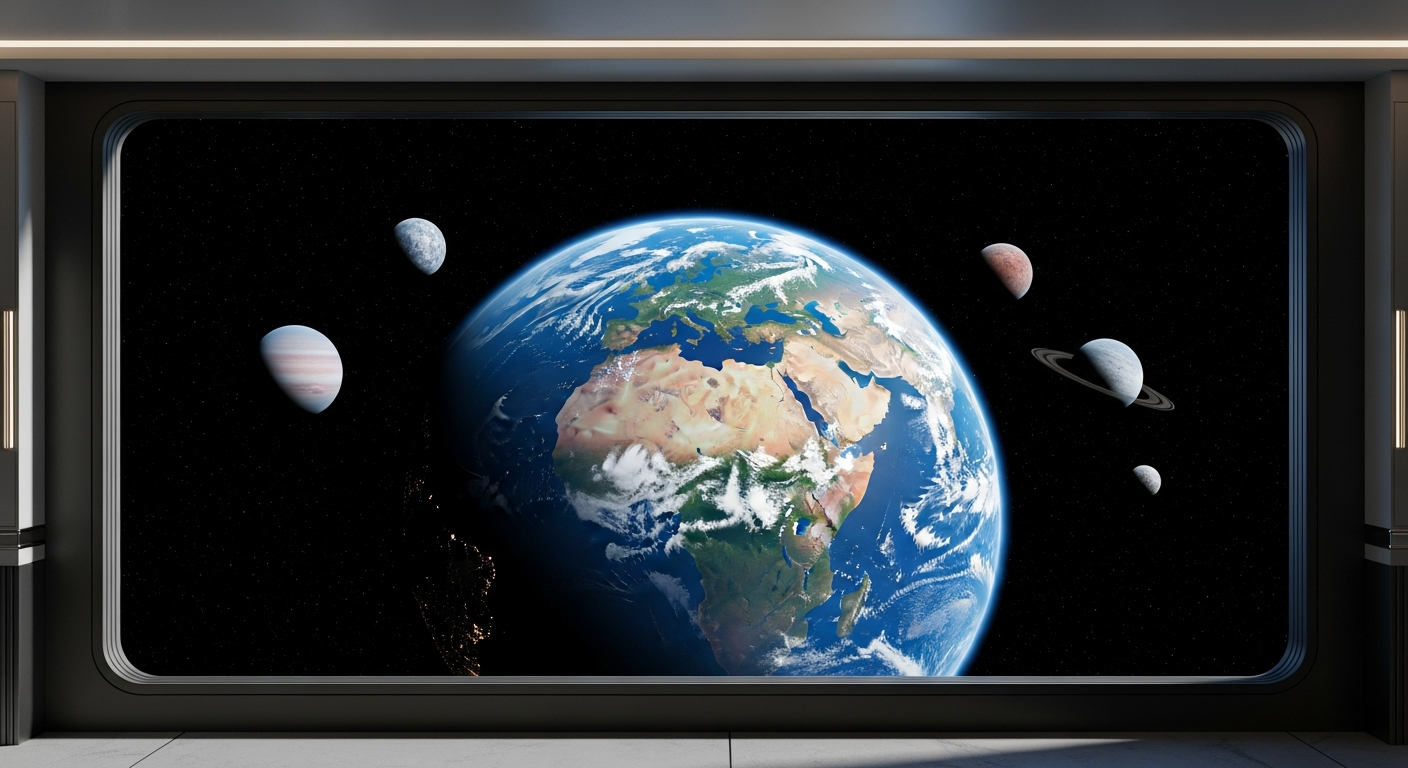
지구 온난화, 자원 고갈, 그리고 예측 불가능한 재앙들. 인류의 생존을 위협하는 문제들이 심화되면서 ‘제2의 지구’를 찾는 일은 더 이상 공상 과학 소설 속 이야기가 아닙니다. 만약 지구가 더 이상 우리를 품을 수 없게 된다면, 인류는 어디로 가야 할까요? 과학계가 인류의 ‘플랜 B’를 위해 치열하게 탐사하고 있는 새로운 보금자리 후보, 가장 유력한 행성 5곳을 소개합니다.
인류의 오랜 꿈, 우주를 향하다
지구 밖 다른 세상에 대한 인류의 호기심은 고대 그리스 철학자들의 사변에서부터 시작되었습니다. 망원경의 발명은 그 꿈을 구체화했고, 20세기에 들어 SETI 프로젝트와 보이저 탐사선은 외계 지성에 대한 우리의 메시지를 실어 우주로 나아갔습니다. 그리고 21세기, 케플러와 제임스 웹 우주망원경은 수천 개의 외계 행성을 발견하며 생명체 거주 가능 구역, 이른바 ‘골디락스 존(Goldilocks Zone)’의 존재를 현실로 확인시켜 주었습니다. 이는 인류가 잠재적 이주 행성을 과학적으로 탐색하는 시대에 들어섰음을 의미합니다.
인류의 이주 후보 TOP 5
- 프록시마 센타우리 b (Proxima Centauri b): 지구에서 불과 4광년 떨어진 가장 가까운 외계 행성. 암석형 행성이며, 액체 상태의 물이 존재할 가능성이 있습니다.
- 트라피스트-1 시스템 (TRAPPIST-1 System): 약 40광년 거리에 7개의 지구형 행성을 거느린 항성계. 이 중 3개의 행성이 골디락스 존에 위치해 큰 기대를 받고 있습니다.
- 케플러-22b (Kepler-22b): 약 600광년 거리의 행성으로, 지구보다 2.4배 크지만 표면에 물이 존재할 수 있는 적합한 온도를 가졌을 것으로 추정됩니다.
- GJ 357 d (GJ 357 d): 지구에서 약 31광년 떨어진 행성으로, 생명체가 살기에 충분히 따뜻할 가능성이 있는 곳입니다.
- 타이탄 (Titan): 토성의 가장 큰 위성으로, 태양계 내에서 가장 유력한 후보 중 하나입니다. 두꺼운 대기와 액체 탄화수소의 바다를 가지고 있습니다.
현실의 벽: 낙관론과 회의론 사이
우주 식민지 건설을 두고 여론은 극명하게 갈립니다. 스티븐 호킹, 일론 머스크와 같은 선각자들은 인류가 다행성 종족이 되어야만 장기적인 생존을 보장할 수 있다고 역설합니다. 기술 발전과 새로운 경제적 기회를 창출할 것이라는 기대감도 큽니다.
하지만 회의론 역시 만만치 않습니다. 천문학적인 비용을 우주 개척이 아닌 기아, 질병 등 지구의 시급한 문제를 해결하는 데 써야 한다는 목소리가 높습니다. 또한 우주 식민지화가 결국 부유한 국가나 개인의 전유물이 되어 지구의 불평등을 우주로 확장시키는 ‘우주 식민주의’가 될 수 있다는 윤리적 비판도 거셉니다. 대중 여론 역시 인간의 화성 탐사보다는 지구 기후나 소행성 충돌을 감시하는 프로그램을 더 우선시하는 경향을 보입니다.
넘어야 할 거대한 산
행성 이주의 꿈을 현실로 만들기 위해서는 극복해야 할 과제가 산더미처럼 쌓여 있습니다.
- 가혹한 환경과 인체의 한계: 우주의 극심한 방사선과 무중력 상태는 근육 손실, 뼈 밀도 감소 등 인체에 치명적인 영향을 미칩니다. 장기적인 거주와 세대 번식의 가능성은 여전히 미지수입니다.
- 기술적, 경제적 난제: 행성의 환경을 지구처럼 바꾸는 ‘테라포밍’은 수백에서 수천 년이 걸릴 수 있으며, 현재 기술로는 실현 가능성을 장담하기 어렵습니다. 사람과 물자를 실어 나르는 데 드는 비용 역시 상상을 초월합니다.
- 윤리적 딜레마: 우리가 도착한 행성에 만약 미지의 미생물 생태계가 존재한다면 어떻게 해야 할까요? 외계 환경을 파괴할 권리가 우리에게 있을까요? 우주 자원의 소유권을 둘러싼 법적, 정치적 갈등도 피할 수 없는 문제입니다.
그럼에도, 미래를 향한 발걸음
수많은 난관에도 불구하고 인류의 도전은 계속되고 있습니다. 스페이스X는 재사용 가능한 스타십 로켓을 통해 화성 이주 비용을 획기적으로 낮추고, 2050년까지 100만 명이 거주하는 도시 건설을 목표로 하고 있습니다. 3D 프린팅 기술로 현지 자원을 이용해 거주지를 건설하는 연구도 활발히 진행 중입니다.
결국 우주 식민지 건설은 단순한 기술 과제를 넘어 인류의 생존과 미래 문명의 방향을 결정하는 철학적 질문을 던집니다. 지구라는 유일한 보금자리를 지키는 노력과 함께, 미지의 세계를 향한 인류의 담대한 발걸음은 오늘도 계속되고 있습니다.
If Earth Falls: Humanity’s Top 5 Candidates for a New Home
Global warming, resource depletion, and unpredictable catastrophes. As threats to human survival intensify, the quest for a “second Earth” is no longer just the stuff of science fiction. If our planet can no longer sustain us, where will humanity go? Here are the top 5 most promising candidate planets that the scientific community is fiercely exploring as humanity’s “Plan B.”
Humanity’s Age-Old Dream: Reaching for the Cosmos
Humanity’s curiosity about other worlds began with the speculations of ancient Greek philosophers. The invention of the telescope brought that dream into focus, and in the 20th century, projects like SETI and the Voyager probes carried our messages to the stars. Now, in the 21st century, space telescopes like Kepler and James Webb have discovered thousands of exoplanets, confirming the existence of habitable zones, or “Goldilocks Zones.” This marks the dawn of an era where humanity can scientifically search for potential new homes.
Top 5 Candidates for Human Migration
- Proxima Centauri b: The closest exoplanet to Earth, just 4 light-years away. It is a rocky planet with the potential for liquid water.
- TRAPPIST-1 System: A star system about 40 light-years away with seven Earth-sized planets. Three of these are located in the Goldilocks Zone, generating high expectations.
- Kepler-22b: Located about 600 light-years away, this planet is 2.4 times the size of Earth but is believed to have a suitable temperature for surface water.
- GJ 357 d: A planet about 31 light-years from Earth that is potentially warm enough to support life.
- Titan: Saturn’s largest moon and one of the most promising candidates within our solar system. It has a thick atmosphere and seas of liquid hydrocarbons.
The Wall of Reality: Between Optimism and Skepticism
Public opinion on space colonization is sharply divided. Visionaries like Stephen Hawking and Elon Musk argue that humanity must become a multi-planetary species to ensure long-term survival. There is also great anticipation for the technological advancements and new economic opportunities it could create.
However, skepticism is just as strong. Many argue that the astronomical costs should be used to solve pressing terrestrial problems like hunger and disease. There is also fierce ethical criticism that space colonization could become the exclusive domain of wealthy nations or individuals, extending Earth’s inequality into space—a concept termed “space colonialism.” Public opinion also tends to prioritize programs that monitor Earth’s climate or potential asteroid impacts over human missions to Mars.
The Formidable Mountains to Climb
To turn the dream of planetary migration into reality, a mountain of challenges must be overcome.
- Harsh Environments and Human Limitations: The extreme radiation and zero-gravity conditions of space have detrimental effects on the human body, including muscle atrophy and bone density loss. The feasibility of long-term habitation and reproduction remains uncertain.
- Technological and Economic Hurdles: “Terraforming,” the process of altering a planet’s environment to be Earth-like, could take hundreds or thousands of years and is not guaranteed to be possible with current technology. The cost of transporting people and materials is also beyond imagination.
- Ethical Dilemmas: What if we discover a native microbial ecosystem on a target planet? Do we have the right to disrupt an alien environment? Legal and political conflicts over the ownership of cosmic resources are also inevitable.
Nevertheless, a Step Toward the Future
Despite numerous obstacles, humanity’s challenge continues. SpaceX aims to dramatically reduce the cost of Mars migration with its reusable Starship rocket, with the goal of building a city for one million people by 2050. Research into using 3D printing technology to construct habitats from local resources is also actively underway.
Ultimately, building a space colony is more than a technical challenge; it poses a philosophical question about the survival of humanity and the future direction of civilization. Alongside our efforts to protect our one and only home, Earth, humanity’s bold steps toward the unknown continue today.
답글 남기기