
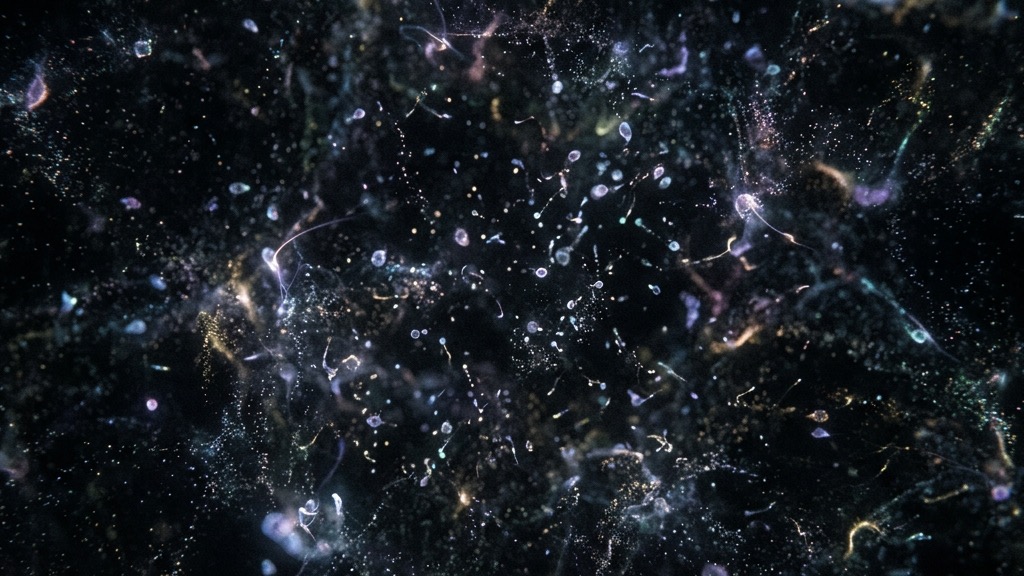
When we look up at the night sky or imagine the vast spaces between the stars, we often picture an absolute, serene emptiness. We believe that if we were to take a box and remove every single atom, every molecule of gas, and block out every photon of light, what remains would be ‘nothing’. Classical physics agreed with this common-sense view for centuries. But quantum mechanics, the strange rulebook of the microscopic universe, tells us a profoundly different story. In the quantum realm, there is no such thing as ‘nothing’. True emptiness is an illusion.
1. The Restless Sea: Zero-Point Energy
To understand the quantum vacuum, we must first look at the foundation of quantum mechanics: Heisenberg’s Uncertainty Principle. This principle dictates that we cannot simultaneously know both the exact position and momentum of a particle. But it also applies to energy and time. It states that you cannot have a precisely defined amount of energy (like exactly zero) over a precisely defined, short period of time.
Because of this fundamental cosmic fuzziness, the energy of a completely empty space cannot be absolute zero. It must constantly fluctuate. This baseline, restless energy that exists even at absolute zero temperature is known as “zero-point energy.” The vacuum is not a flat, tranquil lake; it is a raging, churning ocean of energetic waves constantly crashing into one another in the dark.
2. Heisenberg’s Borrowed Time: Virtual Particles
How does this energetic ocean manifest itself? Through a phenomenon that sounds like pure magic: the spontaneous creation of matter. Because the energy of the vacuum is constantly fluctuating, the universe can “borrow” a tiny amount of energy to spontaneously create a pair of particles—usually a particle and its antimatter twin (like an electron and a positron).
These are called “virtual particles.” They are allowed to exist only for a fleeting, almost unimaginably brief fraction of a second before they must crash back together, annihilate each other, and return the borrowed energy to the vacuum. This happens constantly, everywhere, all the time. The empty space in front of your eyes is literally boiling with countless ghostly particles popping in and out of existence. The void is alive.
3. The Casimir Effect: Proof of the Boiling Void
It is easy to dismiss virtual particles as just a mathematical trick, a quirk of equations. But they have very real, physical consequences. In 1948, physicist Hendrik Casimir proposed a brilliant way to prove the existence of this boiling void, known today as the Casimir Effect.
Imagine placing two uncharged, perfectly conducting metal plates extremely close together in a perfect vacuum. Because the space between the plates is so narrow, only virtual particles (acting as waves) with specific, small wavelengths can pop into existence between them. However, on the outside of the plates, the vast expanse of the universe allows virtual particles of all sizes to exist. This creates a difference in pressure: there are more ghostly particles pushing on the outside of the plates than pushing on the inside. As a result, the plates are mysteriously forced together by the sheer pressure of the ’empty’ space itself. The void pushes.
Conclusion: The Fullness of Emptiness
The reality of the quantum vacuum offers a deeply comforting philosophical perspective. In our lives, we often experience periods of profound emptiness. We suffer from burnout, heartbreak, or a loss of purpose, and we feel as though our internal reservoir has been completely drained. We feel like a perfect vacuum.
But quantum mechanics whispers a reassuring truth: true emptiness does not exist. Even in your most drained, seemingly hollow moments, your internal space is not “nothing.” It is brimming with an invisible, baseline energy. It is a restless, fluctuating field of pure potential, where new thoughts, new strengths, and new versions of yourself are constantly bubbling just beneath the surface, waiting to pop into existence. When you feel entirely empty, remember the boiling void of the universe; your emptiness is actually the foundation of infinite potential.
우리가 고개를 들어 캄캄한 밤하늘을 바라보거나 별과 별 사이의 아득한 공간을 상상할 때, 우리는 흔히 완벽하게 텅 비어있는 고요하고 평화로운 심연을 떠올립니다. 만약 우리가 어떤 완벽한 상자를 만들어 그 안의 공기 분자와 원자를 단 하나도 남김없이 모두 빼내고, 심지어 빛의 입자인 광자(Photon)마저 완벽하게 차단한다면, 그 상자 안에는 과연 무엇이 남을까요? 우리의 상식과 수백 년 동안 세상을 지배해 온 고전 물리학은 그 질문에 대해 망설임 없이 ‘아무것도 없는 완벽한 무(無)’라고 대답해 왔습니다.
하지만 미시 세계를 지배하는 기묘하고도 매혹적인 법칙인 양자역학(Quantum Mechanics)은 우리에게 전혀 다른, 대단히 충격적인 진실을 들려줍니다. 양자역학의 관점에서 우주 그 어디에도 ‘아무것도 없는 완벽한 빈 공간’이란 존재하지 않습니다. 우리가 ‘텅 비어있다’고 믿었던 그 허공은 사실 우리의 감각이 만들어낸 환상에 불과합니다.
1. 잠들지 않는 바다: 영점 에너지(Zero-Point Energy)
진공의 진짜 모습을 이해하기 위해서는 양자역학의 가장 위대한 기초이자 심장인 하이젠베르크의 불확정성 원리(Heisenberg’s Uncertainty Principle)를 먼저 들여다보아야 합니다. 이 원리는 단순히 입자의 위치와 속도를 동시에 정확히 알 수 없다는 것만을 의미하지 않습니다. 이 엄격한 우주의 법칙은 ‘에너지’와 ‘시간’ 사이에도 똑같이 적용됩니다. 즉, 아주 짧은 시간 동안에는 그 공간이 가진 에너지가 정확히 얼마인지(예를 들어 ‘정확히 0’인지)를 완벽하게 확정 지을 수 없다는 뜻입니다.
이러한 우주적이고 근본적인 ‘애매모호함’ 때문에, 아무리 완벽하게 비워진 공간이라 할지라도 그 공간의 에너지는 결코 완벽한 ‘0’에 머무를 수 없습니다. 공간의 에너지는 끊임없이 요동치고 흔들려야만 합니다. 심지어 온도를 절대영도(Absolute Zero, -273.15°C)까지 낮추어 모든 물질의 움직임이 얼어붙는 순간에도, 공간 자체는 미세하게 진동하며 최소한의 에너지를 유지합니다. 이를 ‘영점 에너지(Zero-Point Energy)’라고 부릅니다. 양자역학의 렌즈로 바라본 진공은 잔잔하고 평화로운 호수가 아닙니다. 그것은 칠흑 같은 어둠 속에서 끊임없이 에너지가 파도치고 부딪히며 거칠게 요동치는, 거대한 에너지의 바다입니다.
2. 불확정성이 허락한 찰나의 마법: 가상 입자(Virtual Particles)
그렇다면 이 요동치는 에너지의 바다는 어떤 형태로 우리의 물리적 현실에 모습을 드러낼까요? 그것은 마치 순수한 마법처럼 들리는 현상, 즉 ‘물질의 자발적 창조’를 통해 나타납니다. 진공의 에너지가 끊임없이 요동치고 있기 때문에, 우주는 불확정성 원리가 허락하는 아주 짧은 찰나의 시간 동안 진공으로부터 약간의 에너지를 ‘대출’받을 수 있습니다. 그리고 이 대출받은 에너지는 허공에서 갑자기 한 쌍의 입자—보통 전자(Electron)와 그 반물질인 양전자(Positron) 같은 입자와 반입자 쌍—를 펑 하고 만들어냅니다.
과학자들은 이렇게 허공에서 태어난 입자들을 ‘가상 입자(Virtual particles)’라고 부릅니다. 이들은 우주로부터 에너지를 잠시 빌렸기 때문에, 상상조차 할 수 없을 만큼 극도로 짧은 찰나의 시간(수백억 분의 1초보다도 짧은 시간) 동안만 존재가 허락됩니다. 시간이 다 되면 그들은 다시 서로 충돌하여 소멸(Annihilation)하고, 빌렸던 에너지를 진공에 고스란히 갚아야 합니다. 믿기 힘들겠지만, 이 기묘한 입자의 생성과 소멸은 지금 이 순간에도, 여러분의 눈앞에 있는 텅 빈 공간에서도, 온 우주 전역에서 쉼 없이 미친 듯이 벌어지고 있습니다. 텅 빈 진공은 죽어있는 공간이 아닙니다. 그것은 수많은 유령 입자들이 끓는 물의 기포처럼 끊임없이 나타났다 사라지며 격렬하게 ‘끓어오르고 있는’ 생명력 넘치는 공간입니다.
3. 카시미르 효과(Casimir Effect): 끓어오르는 허공의 증거
물론 어떤 사람들은 이 ‘가상 입자’라는 개념이 그저 물리학자들의 복잡한 칠판 위에서나 존재하는 수학적 속임수가 아니냐고 의심할 수 있습니다. 하지만 이 유령 같은 입자들은 대단히 물리적이고 현실적인 흔적을 남깁니다. 1948년, 네덜란드의 물리학자 헨드릭 카시미르(Hendrik Casimir)는 이 끓어오르는 허공의 존재를 증명할 놀랍도록 우아한 방법을 제안했고, 이는 오늘날 ‘카시미르 효과(Casimir Effect)’라는 이름으로 실제로 널리 증명되었습니다.
완벽한 진공 상태의 공간에, 전기가 통하지 않는 두 개의 얇고 평평한 금속판을 아주 미세한 간격(머리카락 굵기보다 훨씬 좁은 간격)으로 마주 보게 둔다고 상상해 봅시다. 고전 물리학에 따르면 두 판 사이에는 아무것도 없으므로 어떤 힘도 작용하지 않아야 합니다. 하지만 양자역학의 세계는 다릅니다. 두 금속판 ‘사이’의 좁은 공간에는 그 틈새의 폭에 맞는 특정 파장(크기)을 가진 가상 입자들만이 태어날 수 있습니다. 반면에 금속판 ‘바깥쪽’의 무한한 우주 공간에서는 온갖 다양한 크기의 가상 입자들이 마음껏 태어나고 소멸하며 요동칠 수 있습니다.
이로 인해 기묘한 압력의 불균형이 발생합니다. 금속판 안쪽에서 판을 밀어내는 유령 입자들보다, 금속판 바깥쪽에서 판을 안으로 짓누르는 유령 입자들의 수가 훨씬 더 많아지는 것입니다. 그 결과, 아무런 극성도 띠지 않은 두 금속판은 텅 빈 ‘허공(진공) 자체’가 가하는 물리적인 압력에 의해 서로 강하게 달라붙게 됩니다. 아무것도 없다고 믿었던 텅 빈 허공이, 실제로 물리적인 힘을 발휘하여 물체를 밀어낸 것입니다.
Conclusion: 텅 빈 충만함이 건네는 위로
아무것도 없는 무(無)의 공간이 사실은 어마어마한 에너지와 가능성으로 끓어오르고 있다는 양자 진공의 진실은, 우리 삶을 돌아보게 하는 대단히 따뜻하고 깊은 철학적 위로를 건넵니다.
우리는 삶을 살아가면서 종종 내면이 완벽하게 ‘텅 비어버리는’ 듯한 깊은 상실감과 공허함을 경험합니다. 인간관계에 지치거나, 목표를 잃어버리거나, 뼈아픈 실패를 겪고 심한 번아웃에 빠졌을 때, 우리는 내 안의 모든 에너지가 완전히 고갈되어 아무것도 남지 않은 ‘완벽한 진공’ 상태가 되었다고 절망하곤 합니다.
하지만 우주의 가장 깊은 진리를 다루는 양자역학은 우리의 지친 어깨를 토닥이며 이렇게 속삭입니다. “이 우주에 완벽하게 텅 빈 곳은 단 한 군데도 존재하지 않는다”고 말입니다. 당신이 모든 에너지를 소진하고 껍데기만 남은 것처럼 텅 비어 있다고 느끼는 그 순간조차, 당신의 내면은 결코 ‘아무것도 없는 무(無)’의 상태가 아닙니다. 그곳에는 여전히 보이지 않는 ‘영점 에너지’가 흐르고 있으며, 수많은 새로운 생각과 새로운 감정, 그리고 새로운 가능성이라는 ‘가상 입자’들이 끊임없이 끓어오르며 태어날 준비를 하고 있습니다. 당신이 느끼는 그 거대한 공허함은 아무것도 없는 결핍의 상태가 아니라, 오히려 무엇이든 새롭게 태어날 수 있는 무한한 잠재력과 순수한 에너지의 바다입니다. 끓어오르는 허공은 우리에게 말해줍니다. 가장 철저하게 비워졌다고 느끼는 그 순간이, 실은 무언가로 다시 가득 채워지기 위한 가장 경이롭고 역동적인 준비의 순간이라는 것을 말입니다.
답글 남기기